
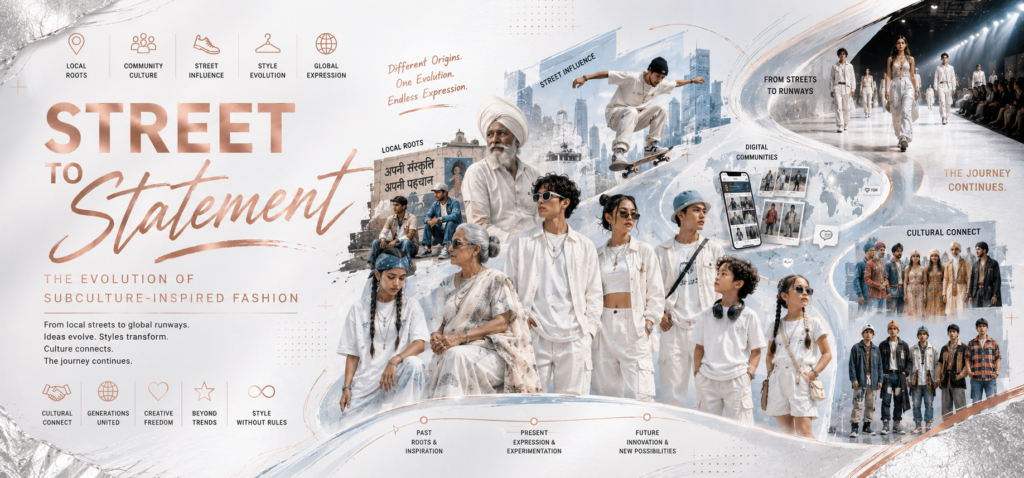
The relationship between street style and the wider fashion industry has transformed significantly over time. Ideas that once developed within local communities can now influence designers, independent brands, retailers, and fashion enthusiasts around the world. Subculture-inspired fashion continues to evolve as different generations reinterpret familiar ideas through their own experiences.
Streetwear has played an important role in this evolution. Comfortable silhouettes, sneakers, graphic elements, practical outerwear, and relaxed styling have moved from specific communities into a much broader fashion conversation. At the same time, these elements continue to change as designers experiment with new fabrics, proportions, and combinations.
Another important part of this evolution is the movement of fashion ideas between communities. A detail inspired by workwear may appear alongside vintage pieces, while sportswear influences can be combined with tailored clothing. These unexpected combinations help create contemporary looks that feel connected to several different fashion traditions rather than a single category.
The growth of digital fashion communities has also changed how trends develop. Designers and style enthusiasts can share outfit ideas, creative projects, and styling techniques with audiences across the world. This increased visibility allows inspiration to travel quickly, while local communities can still maintain their own distinctive character and perspective.
Today, subculture-inspired fashion is not defined only by where an idea began. Its meaning can change as people adapt it to new places, lifestyles, and generations. From casual everyday clothing to more expressive statement looks, these influences continue to demonstrate how fashion can move between communities while remaining open to creativity and personal interpretation.